
Most of Dawloom’s work is a lot of separate, mostly small engagements across mobile, web, desktop, and AI work, rather than one long relationship that built trust once and coasted on it afterward. Fiverr shows 525 delivered orders across more than nine years, currently rated 4.9 from 335 reviews, and Freelancer.com shows a separate profile rated 5.0 from 156 reviews. Both are linked from our reviews page rather than summarized here, because a rating that holds up across that many small, mostly one-off projects has as much to do with how the work got talked about along the way as with the code itself.
Across those separate projects, a handful of habits about communication turned out to matter more than anything in the codebase. None of them need special tooling. All of them are easy to skip once a project gets busy, which is exactly when skipping them costs the most.
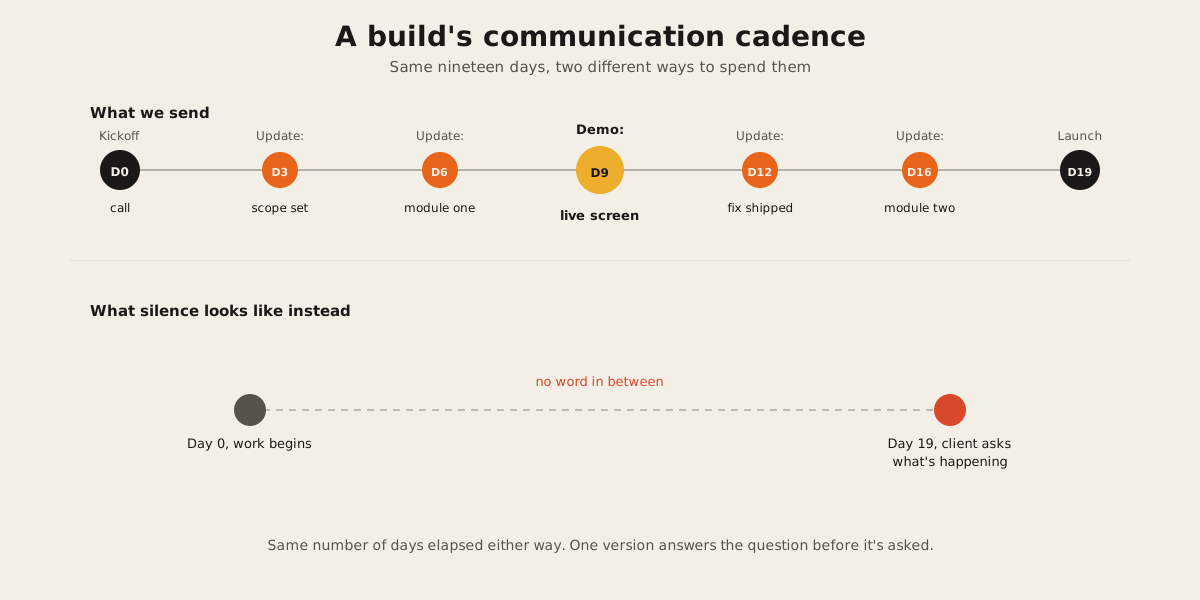
Short updates beat long silences
A client who sends work into a queue and hears nothing for two weeks tends to assume the worst, even when nothing is wrong. Silence reads as a problem whether or not one exists, because there’s no way to tell the difference from the outside. A short message sent every few days, something as plain as “inventory sync module done, moving to vendor mapping next,” removes that guesswork and costs almost nothing to write.
What makes this sustainable is sending the update the moment something finishes, instead of saving it for a scheduled report. A two-line message written right after finishing a piece of work takes a minute. A polished weekly summary of five days of work takes an afternoon to write, and by the time it goes out, most of what’s in it is already old news to the person writing it.
A demo answers more than a description
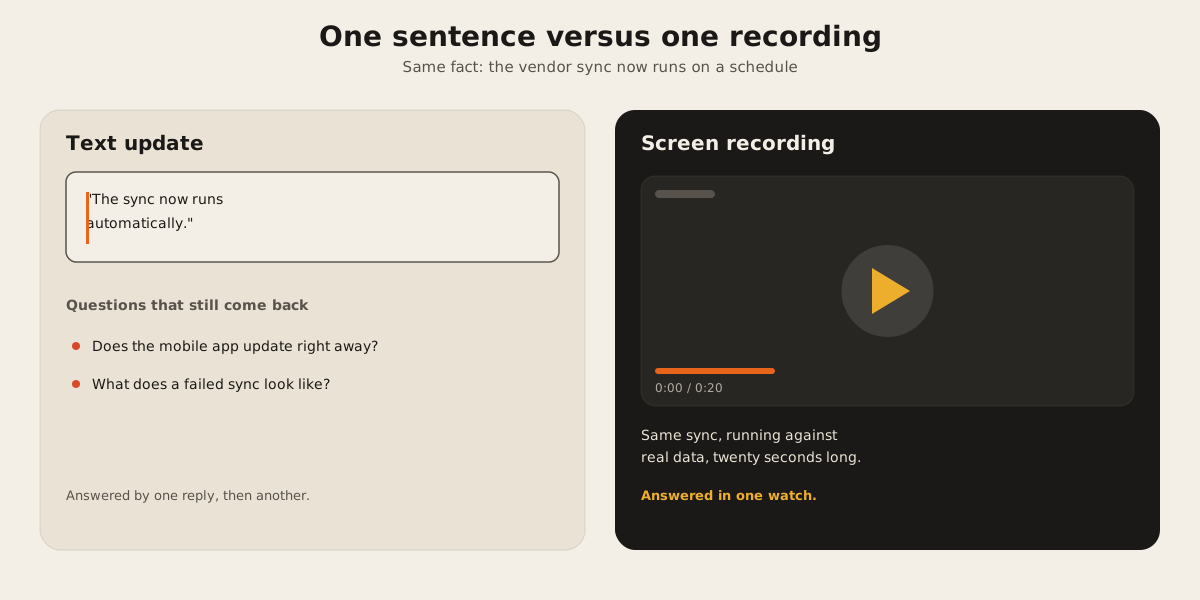
FurnitureAxis, the multi-tenant SaaS we built for furniture retailers, runs a C# worker that syncs a vendor catalog against Shopify and Algolia on a cron schedule. Writing “the sync now runs automatically” in a message is accurate and still leaves real questions open, like whether the Expo mobile companion app picks up a price change right away, or what a failed sync looks like to the person watching the dashboard. A short screen recording that walks through the sync running against real data answers both in one watch, instead of the back-and-forth it takes to sort out over email.
Text is faster to write. A recording is faster to understand, especially across a language gap or a technical vocabulary gap between a developer and a store owner who has never had a reason to know what a webhook is. We default to showing a working screen over describing one, because there’s less room to misread something that’s actually running in front of you than a sentence about it.
Bad news travels first, not last
The instinct when something goes wrong, a third-party API rate-limits harder than the docs said it would, or an estimate turns out wrong, is to hope it resolves before anyone has to say anything. It rarely does, and the later it surfaces, the fewer options the client has left. A launch date can move if someone hears about a problem three weeks out. It can’t move gracefully if they hear about it three days out.
Saying “this part is behind” the day it becomes true, rather than the week it becomes obvious, is not a comfortable habit. It means delivering worse news more often than staying quiet would. It also means the client finds out about a problem while there’s still time to do something about it, instead of finding out at the same moment they find out it’s too late.
Scheduling that’s honest about the timezone gap
Dawloom’s team works out of Pakistan, on Pakistan Standard Time, with no daylight saving to shift that gap twice a year. Most of our clients are in North America or Europe, so the window where both sides are online at the same time is real and finite. Saying “flexible” enough times doesn’t make it bigger.
Telling a client during onboarding which hours we’re reliably reachable, rather than promising to always be available, sets an expectation we can keep instead of one we’d have to walk back the first time it’s actually tested. A meeting booked inside that window happens on time. A meeting booked outside it, because nobody said where the edges were, is the kind of thing that quietly erodes trust before the project has even properly started.
These habits are about staying on the same page with the client, more than about anything in the tech stack, and on a project with as many moving pieces as a multi-tenant SaaS with a background sync worker and a mobile companion app, that’s a separate skill from writing the code that makes the sync work.
None of these habits require an app or a process document. They require doing them on every project, including the small ones. If you want to see how that holds up before you commit to anything, read the reviews yourself instead of taking our word for it, then tell us what you’re building.